Thursday, July 28, 2016

Lady Puncetto and the Valle Vogna

This article appears in this month's Giuliana Ricama in Italy so if you'd like to read it in Italian, you can find it there. 

Towards the end of the 19th century an educated and cultured Irish lady from a good and rather important family passed her summers, perhaps for health reasons, in the Alps. She travelled all the way to the Val Vogna, a small Piedmontese valley and fell in love with the place. She particularly admired it's hardworking women who, left alone for many months of the year while their men were working in France, looked after their families in great poverty. A fire destroyed one of the small hamlets and the lady had a generous idea which, for the valley, turned out to be a brilliant one. She gave the hamlet the money to reconstruct the few houses and animal stalls and as repayment she asked for pieces and lengths of the local Puncetto needle lace. Returning home to Ireland she was able to sell all the lace to her friends and many acquaintances. She arrived the next time in Piedmont with orders for more items and started up the Valvognian Industry with it's base of operations in Ca' Verno (Riva Valdobbia). She worked with the help of Agata Maria Teresa (Marietta) Frascotti Favro (1841-1899), an elementary school teacher, who had taught the working of Puncetto in the surrounding area, and who was the wife of the owner of Casa Janzo (Riva Valdobbia), the hotel where the Irish lady stayed during the summer. Clorinda Barile Favro (1877-1962), a pupil of Marietta, managed the business activity of the Valvognian Industry. In this way the women of the valley started to earn with the Puncetto that they made. 

A few lacemakers from the Valvognian Industry including Aurelia Barile,
Teresa, Carolina and Maria Andoli and Clorinda Favro.

The Irish lady, a great traveller, used her numerous connections to sell the lace. The business grew and came to include the working of other types of lace and embroidery on Irish linen. In this way they helped to relieve some Irish poverty as well. Through a barrage of articles in newspapers and women's magazines in England, Europe and also in the U.S. and through orders taken during national and international expositions, the women of the Val Vogna experienced a period of very productive business and unexpected comfort.

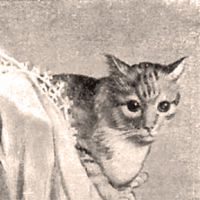
Eliza Matilda Johnson Lynch 1846-1917. Catholic World, 1897, vol. 66, n. 391, p. 137.

Over the last century there has been much misinformation about the Irish lady. Legend and myth became fact and when facts were not known, unfortunately for history, they were invented. She signed herself E. M. Lynch, and this has created much confusion. Through the advent of periodicals online and great genealogy websites, today we can finally get a few clearer ideas. The most important one is her name. She was called Eliza Matilda Johnson. Born in 1846 in Ireland, she then married Captain Edward Aloysius Lynch in 1866. Eliza was a suffragette and was active in England, making speeches and participating in campaigns for women's rights. She wrote articles for many magazines and newspapers on social problems, travelling and the uses and folk costumes of the countries she visited. She even wrote a bit of fiction. In Davos, Switzerland in 1901 she published a small volume called “Valle Vogna and its lace industry” collecting images and many articles which had appeared in newspapers and magazines about her business in Val Vogna. A second edition (1905) of this little book can be found among the book collection of the Italian scholar Elisa Ricci. The collection is now held by the Civic Central Library in Turin, Italy. Another copy of the second edition, with a dedication written by Mrs. Lynch can be found in the Thomas J. Watson Library of the Metropolitan Museum in New York. An Italian version was translated and printed by the Walser Gmai of Alagna Valsesia in Piedmont in 1992. After the death of her husband in 1899, Eliza continued to travel to Italy and other parts of Europe. In her later years, she settled in Sanremo in Liguria. She died in Triora (Liguria) on the 8th of September 1917. There is still much to learn about this Irish lady and her activities. This is the beauty of research in the world of Italian embroidery and lace: I never stop investigating, discovering and learning.

Sunday, May 8, 2016

Bargello Embroidery


Bargello Embroidery seems to be enjoying a bit of a revival lately on both sides of the Atlantic. I've seen lots of it through the various North American needlework guilds and also on Facebook among Italian stitchers. The designs, patterns, colours and use of imagination are wonderful and a delight to look at.

This technique goes by many names: Flame stitch, Hungarian point, Bargello, Florentine stitch, Gobelin stitch, Irish stitch and many others. There is a fascinating English language article on possible origins, different styles and extant examples that you can download and read here.

For the Italian take on it, a Google search for "punto fiamma" produces some spectacular examples. It is a technique used often for upholstery on things such as chairs and cushions, if you pay attention in the Italian museums, there are sometimes chairs set around the perimeter of the rooms which are cordoned off so you can't sit on them. These are easily passed by and ignored but close inspection can reveal some wonderful Bargello embroideries which have faded and deteriorated over time but which are still great examples of very complex Bargello embroidery patterns.


If you are looking to stitch a little taste of many Bargello designs, have a look at this wonderful sampler by Maria Elide Melani of the association Ago, Aga e Fantasia of Pistoia, Italy.


Each section is a different Bargello pattern separated by drawn thread channels. I like this idea as then you don't have to worry about trying to work out how to have your various patterns butt up neatly against others, and the drawn thread work creates some definition to the sampler itself.


The pattern booklet (text in Italian) is available from Maria Elide herself, send her an email or contact her via her Facebook page. Please note that the drawn thread work and hemming is not explained in the booklet.

There are 21 different Bargello patterns to stitch with lovely close up photos of the finished embroideries to copy from. You could then easily adapt any one of the patterns for a towel border or for placemats or whatever your heart desires!

Thursday, April 28, 2016

Tassel books!


Maria Rita Faleri has been hard at work creating a series of books on handmade knotted tassels. In this post I told you a little bit about Maria Rita and since then we have been chatting back and forth during the development of this great series that she has started. As I also wanted to let you know how to get your hands on these books, I have been holding off telling you about them while Maria Rita worked out how people outside of Italy could purchase them easily. She has settled on ebay which seems to work quite nicely. Those of you who are in Italy can contact her through the Esemplario website, set up specifically for this series.

Maria Rita wanted to start this series with the aim of creating step-by-step manuals for these tassels and the knots used to create them in Italian. She felt that there wasn't a lot in the way of instructions for Italians which meant that they had to refer to books in other languages, so the text of these books is in Italian. However, the step-by-step photos mean that those who don't speak Italian can easily understand. I did translate the instructions for the Turk's Head knot and Maria Rita plans to put it on the Esemplario website just as soon as she can.

The first book in the series is about making tassels with the Turk's Head knot (and many variations of it including an elongated one which is quite nice to use as the tassel head):


Sample page of step-by-step photos.

To make the Turk's Head knot, Maria Rita uses the aid of bamboo sticks and I managed to find some double-pointed carbonized bamboo knitting needles on amazon which work very nicely though they are not exactly the same as what Maria Rita uses, they work just fine. Before I found these though, I just used kebab sticks and they worked too, though I got a few splinters.

Included in this book are instructions for the basic Turk's Head knot, the elongated Turk's Head knot, the wrapped knot and instructions for the assembly of a half a dozen different tassels using what you've learned.

The second book in the series is about making tassels with the Franciscan Knot and the Simple Knot:


Some of the tassels included in the second book.

This book also has instructions for the basic Turk's Head knot, much more detailed instructions for the wrapped knot, different tassel head ideas and assembly instructions for a dozen different tassels and some bomboniere too! Many more applications spring to mind just leafing through the pages.

Maria Rita has other plans for this series, not just tassels but embroidery techniques as well. Different projects will be released separately as leaflets or kits using the techniques from the books. I personally can't wait to see them and will let you know when they are available. You can purchase these books from ebay.it searching for object number 131794775737 for the Turk's Head book and object number 131794778449 for the Franciscan Knot book. If you are in Italy, you can contact her via email.

Thursday, April 14, 2016

Rare Needle Lace Patterns


I'm so excited to tell you about a booklet that has just come out. It is a facsimile reprint of a rare 16th century needle lace pattern book currently held in the public library of Forlì, Italy.

Besides 44 plates of needle lace patterns, there is also the story describing the rediscovery of this particular copy and its significance as well as detailed information on the very few other surviving copies. There is some controversy as to the true author of the patterns and the editor of this reprint, Bianca Rosa Bellomo, lays out all the known facts and hypotheses - it is a fascinating read. There are few words about the structure of the designs and then some highlights as to the subject matter of the patterns themselves with respect to the heraldry and symbolism represented. All text is accompanied by precise footnotes and there is a valuable and detailed bibliography for further study.


The first plate is a design incorporating the coats of arms of the Gonzaga and Este families as the original pattern book was dedicated to Margherita Gonzaga d'Este (1564-1618) the Duchess of Ferrara at the time.

Margherita Gonzaga d'Este. Photo from Wikipedia.

The imperial eagles belong to the Este coat of arms; the siren is an antique symbol to exalt the gifts of song or to indicate an important woman; at the top there is an Este eagle and at the sides, lions rampant are resting on the Gonzaga crown.

The booklet is 60 pages and the text is in Italian and English. It can be purchased direct from the publisher, check out their website, they take PayPal. As Lacis in Berkeley, California is their North American distributor, you can contact them to request a copy. Remember that the book was just released in Italy so it may be a little while before it is available on this side of the ocean.

Monday, March 28, 2016

Needlework Challenge - Valtopina 2016


I really like needlework challenges, I think they bring out some great creativity and it is always interesting to see how people interpret a theme differently. This fall, September 2, 3 and 4 to be exact, the Hand Embroidery and Artisan Textile show in Valtopina, Italy (in the Umbrian region) is running a challenge which is open to international entries.

The theme is Embroider Umbria: blades of grass and flowers for women's rights. To remember victims of abuse and violence against women, the celebration of the wildflowers of Umbrian meadows and hills. The "thread" of a message from Umbria to express the value of feminine identity, of women's freedom "to be and to do" and to share in the commitment of the defence of their rights.

Sounds like a great theme, don't you think?

Umbrian meadows - photo courtesy of the Scuola di Ricamo Valtopina.

Umbrian hills - photo courtesy of the Scuola di Ricamo,Valtopina.

To get some ideas of which flowers are found in the Umbrian countryside, you can explore some websites like Castelluccio di Norcia, or there is a list of Italian and Latin names here, or do a Google search for "Apennine wildflowers".

Entries will be judged on September 4th, 2016 during the 17th edition of the Hand Embroidery and Artisan Textile Show in Valtopina. This is a much anticipated textile show every year and there are workshops and vendors to keep you busy aside from the exhibits. If you get a chance to go, don't miss a trip to the Embroidery and Textile Museum.

The prizes for the challenge are pretty fabulous:
1st prize is an all inclusive weekend for two in Umbria,
then, there will be a prize from the Manifattura tessile Sotema who make great fabrics,
a prize from Flli. Graziano who make great fabrics too,
a prize from Grigoletto Filati who make embroidery threads,
a prize of 30 ct Valtopina needlework linen from Bergamasco which is a fantastic needlework shop,
a prize of local products from the ProLoco Valtopina,
a prize from the Municipality of Valtopina,
an Artistic Craft prize from the artist Giulio Piermatti and participation certificates for all who enter.

Click on the picture below for the official rules and guidelines for entering the challenge:


Or you can send an email to Maria Mancini, check out the show's website for photos of previous years' challenges. Your entry must be received no later than July 31st, 2016.

I look forward to seeing the entries to this years challenge!

Wednesday, February 3, 2016

Embroidery on Tulle - books, books!


Well, an interesting few months have kept me from posting and the stack on my floor of books and other ideas for blog posts has grown into a mountain! While I have not had a moment to post, I have not in the least forgotten you!

I have posted about Ars Panicalensis before and I want to tell you about the latest developments of Paola Matteucci and her fabulous applications of this beautiful Italian needlework.

Traditional Ars Panicalensis is a whitework technique embroidering on tulle.


Paola produced a detailed manual in 2013, the cover of which is shown above. It is an extensive step-by-step tome of some 130 pages. While the text is in Italian, the photos are very clear:


I have had the good fortune to see Paola's work up close and it is truly breathtaking. I will never forget the bridal veil... I have a kit of hers for a cushion cover waiting for me to find the time and I managed to purchase a scissor case and fob, just to have a piece of this exquisite technique to appreciate at home.


While Paola excels at the traditional, she also has an eye to innovation. She has developed works of art embroidering on coloured tulle with silks and wool threads!


Her second book is 40 pages of combinations of Ars Panicalensis, Bandera Embroidery and Crewel work... on black tulle. The effect is so pleasing to the eye! This book concerns itself with the use of wool, specifically the fine wool of the French company La Route de la Laine, I think we know it as Fine d'Aubusson here in North America.


This time, the text of the book is in Italian and English! The English having been translated by British ex-pat Patricia Girolami who lives in Italy and runs her own embroidery school. She has translated many Punto Antico books for the Edizioni Punto Antico.

The title of this latest book is "Coloured Wool 1" so I hope this means that there will be a series to come and perhaps even one about her adventures with silk threads on tulle. Paola's talents are inspiring and I look forward to seeing what she does next!

Both Embroidery on Tulle books are available directly from the author Paola Matteucci's website and she excepts PayPal.


Sunday, November 15, 2015

Snowflakes II: Guest Post with Gioja Ralui


Last year Gioja Ralui, author of the books Sardinian Knot Stitch (in English) and Punto Annodato Sardo (in Italian) appeared here and elsewhere as a guest to present a freebie snowflake pattern, this year she goes a step further to present a project of snowflakes! If you would like to read this post in Italian, please go to either blog: ricamo e... altro or TuttoRicamo. I turn the blog over to her, so she can tell you all about it:


Christmas Table Mat

As was done last year, also for this Christmas 2015 I would like to offer my Sardinian Knot Stitch pattern. It is a table mat on beige Assisi linen embroidered in the classic Christmas color: red.

As you can see it is a cascade of snowflakes of various sizes, each one different from the other. They are all enclosed in a frame of a simple zig zag with the 'gruxittasa' (remember that the 'x' must be read as the French 'j') pattern in each corner and in the middle of each side. [gruxittasa means 'the crosses' in Sardinian] Finally, to complete the project, some drawn-thread work (removing two fabric threads): the simple hem stitch for securing the hem and along the edge, the arches with picots that make up the classic edging of Sardinian Knot Stitch works.

Information on how to realize the hem with the mitred corners and the simple hemstitch can be found in large quantities in the internet. I limit myself to a couple of suggestions:
mitred corners
simple hemstitch
However if these do not seem comprehensive enough, type in a search engine 'tutorial mitred corners' and 'tutorial simple hemstitch' and you will find everything you need.

Some of the snowflakes on this embroidered table mat were published in my book Sardinian Knot Stitch and are not repeated here. I would like to remind readers that in it you will find all the instructions for the work, both with regard to the stitch execution and the needle lace edging. Remember too, that the proceeds from sales go to charity. Last year over $2,500.00 US dollars were donated to the Catholic Mission of Camp Garba in Kenya allowing kids to to attend school in the area. I wonder if this year you will help me achieve the same result?

As I mentioned above, for the execution of the table mat, 28ct Assisi linen fabric in beige with Anchor Ritorto Fiorentino no. 12 pearl cotton, colour no. 47 was used. The dimensions of the fabric are: 41 cm x 33.5 cm which includes the 1.5 cm to be folded back on each side to form the hem.

In the photo below, numbers have been assigned to facilitate the recognition of the snowflakes in relation to the corresponding patterns:


Due to space limitations and in order to not go on too long, the patterns indicated with numbers: 1, 2, 3a and 3b are not included here but can be found, respectively, on pages 55, 53 and 56 of the book.

Below are the patterns of the other previously unpublished snowflakes:


Snowflakes numbered 4, 5 and 6.


Snowflakes numbered 7 and 8.


And finally, snowflake number 9 and the patterns for the frame of zig zag with gruxittasa which is executed 1 cm to the inside of the drawn-thread work hemstitching. 

One last tip: although I realize that each of us has his own method of working: I do the hemstitching first (but the arches I leave until last) because it helps me with the placement of the rest of the embroidery... but it is not written in stone that you must do it this way!

Of course the placement of the snowflakes may be distributed in different ways depending on personal tastes, or the composition may also be reduced with regard to the number of snowflakes themselves. Furthermore they may be used differently: to decorate placemats, for example, or used individually (obviously only in the case of the tiniest ones) to make small Christmas gifts such as bookmarks or Christmas tree ornaments... Projects to achieve all of these suggestions can be found in the book Sardinian Knot Stitch.

Happy Stitching!

Sunday, November 8, 2015

Crochet Cotton for Needlework


Using Crochet Cotton thread for needlework is something that different types of Italian needlework call for. Crochet Cotton is a twisted mercerized cotton thread. It is not shiny the same as Pearl Cotton but does have a sheen to it. It gives a different effect to the embroidery. There are various weights and I've done some experimenting with it for tassels, using DMC Baroque and Natura but until recently, I've never tried it for embroidery.

DMC Babylo #10 ecru thread on 38 ct Sotema 20L linen.

Here is a sample of Sardinian Knot Stitch done on 18ct fabric with Anchor Crochet Cotton and DMC Pearl Cottons (click on the photo for a closer look):


When telling you about Giuseppa Federici's new book here, I mentioned that it called for Crochet Cotton and that in Italy (and other parts of the world) both DMC and Anchor offer a decent colour range in their crochet cottons. Alas they do not offer the same threads in North America and so I set about hunting down some Crochet Cotton in lots of colours.

A kind friend from Italy sent me some Anchor Freccia #12 which is similar in weight the #10 Crochet Cotton we can find in North America. Then I found some DMC Babylo #10 on a UK website that I have ordered from often for other things. They appear almost identical in thickness. Pretty close to Pearl Cotton #5 but a bit thinner. Please note that I could not try all of DMC's products like Cebelia and Traditions or Coats Aunt Lydia's because I could not find them locally in colours that I wanted and there were only so many funds I wanted to spend on online ordering for an experiment. The point of my experiment was really to find a #10 Crochet Cotton in the widest range of colours possible. There are other products available in North America that you can try.

An internet search led me to a website called Handy Hands which sells a line of various weights and colours of 100% Egyptian cotton cordonnet thread called Lizbeth. It comes in 102 solid colours, 87 variegated colours and 10 colours which are a mix of three different colours twisted together. Handy Hands is based out of Paxton, Illinois, though they do not have a bricks and mortar storefront.

Now, Anchor or DMC #10 Crochet Cotton which is what I was looking to match, is made of 3 threads twisted together. Lizbeth thread is made of 6 threads twisted together so obviously the look of the Lizbeth thread is a bit different but I decided to see if it would be a suitable substitution.

I wrote and asked them if they could help me match some samples of Anchor and DMC colours that I had gotten from Italy. They answered right away and gave me some matches but it's difficult to match from photos so in the end, I mailed them my thread samples because there just isn't anything better than having something in your hand when you're trying to match colours!

I have to say, Handy Hands' customer service is excellent. They must have looked up the colours as soon as my samples arrived because, allowing for cross-border mailing, it was no time at all before I received colour-matches for all the colours I asked about. These colours are for a project which I will tell you about in a different post.

The Lizbeth #10 thread is the same thickness as my Anchor and DMC threads but because it is made up of three sets of 2 threads twisted together, it's a little like stitching with a cord instead of a thread.
I did three lines of stitches: stem stitch, chain stitch and Palestrina Knot stitch. The top or first line of each set is the Anchor Freccia and the other is the Lizbeth.

Anchor Freccia #12 and Lizbeth #10 on Zweigart 36 ct Edinburgh linen.

There is a bit of difference in sheen and of course the twist, but overall, I'd say it's an excellent substitute! I love the way the thread sits up on the fabric for a very textural embroidery. I'm thinking Palestrina EmbroideryParma Embroidery, Umbrian Embroidery, even traditional embroidery when you want to create a more rustic, raised effect.

Lizbeth thread is distributed worldwide, they have a list of distributors online for a store near you or you can order directly from their website. Signing up for their newsletter before December 31, 2015 gets you free shipping in the US.

Much thanks to Barbara at Handy Hands for her infinite patience, valuable insight and quick, efficient service!

Friday, October 23, 2015

Italian Needlework Books easily available outside Italy


One of the most frequent requests I get is: "where can I buy these books in English?" Now, I've come to understand that this does not necessarily mean that readers are asking that the texts be in English, though most of the time that is what they are asking, but they also want to buy them from websites in English because they are not comfortable with the uncertainty of online translators.

I do not get any compensation for mentioning books here, even the ones I translated (just to get that out of the way). I try to tell you about the things that I know are available and how I know how to get them. In the past I haven't recommended resellers as a rule because these books are already marked up as the resellers have had to cover their own costs in receiving the books from Italy. When possible, I have mentioned direct sources so you get the lowest cost which might mean a bit more work to make the purchase.

Please know that when I write a book review, I always say what languages the text is in. If I write "text in Italian" that means that an English language version does. not. exist. I'm sorry that I cannot translate the books for you. I would love it if all of them were in English text too!

In the past few years the Lace and Embroidery line of books from Nuova S1 in Bologna has been able to secure distribution in a few places outside Italy: Amazon's various websites and affiliates, Barbara Fay in Germany, Book Depository in the U.K., Lacis in the US. and Ryunan Bros in Japan. (Please note that Nuova S1 publishes other types of books so not everything that shows up in a search of their name will be a book about embroidery.)

Books for you in Canada sells a selection of Italian needlework books, though I did not see any Nuova S1 books, there were others which I've reviewed here.

I found searching Book Depository's website that there were a number of titles available and at reduced cost, plus they ship free worldwide. I did various searches including by publisher, by author's name, by technique. Use my Italian Needlework Library page as a reference for many titles and authors but remember that I don't have everything and some stuff will be out of print.

There are some clues to find the information you want. At Book Depository I couldn't get any of Nuova S1's books to come up under a general search of the publisher's name but searching an author's name gave me results:


Now, here the languages are listed as "multiple languages" but in the title it says: "inglese" which means "English".

Amazon brings up all of Nuova S1's books by doing a search of their name which is handy, it gives you everything together without having to search individual author's names but it also brings up non-needlework books too. A search with the word "ricamo" (Italian for embroidery) brought up all kinds Italian books, not only the Nuova S1 ones, so be imaginative in your search terminology.

One final word about resellers: while Amazon and Book Depository are well known and honourable, it is helpful to ask if the book is actually in stock before approving payment when dealing with other, smaller online resellers. Many wait for an order to come in before searching out the book themselves and your wait time can be frustrating. Remember that when not buying direct from the source, you are essentially hiring someone to find the book for you.

I hope this helps you with your holiday shopping!

Wednesday, October 14, 2015

Macramè from Chiavari


Last April when I was in Bologna, I got to attend a trade fair called Mondo Creativo [Creative World]. There was some embroidery and lace, lots of quilting and beading, decoupage, ceramics, jewellery making, felting, knitting, crochet, cake decorating and all kinds of do-it-yourself crafts that you'd expect at a fair of this kind. You can watch some video coverage of it here.

It was quite crowded and I walked around and around, going up and down the aisles trying to take it all in. I was there for a few hours and it was getting close to the end of the day when I reached the farthest corner of the vast space and discovered a booth full of the most wondrous Macramè.


I've told you in previous posts about the Macramè of Italy and how it's not anything like what North Americans usually think of. What I saw in this booth would take your breath away.

The lady demonstrating was Luciana Brescia and I got to talk to her for a bit. She told me about the type of Macramè she was doing which is a style local to the area where she lives, it is called Chiavari.


Chiavari is a small town a bit to the south of Genoa on the north-western coast of Italy. It is said that Macramè has been produced in the area for more than 700 years. It is traditionally used to ornament household and ecclesiastical linens and Luciana showed me the linen she uses that is locally woven especially for embellishment in macramè.


I couldn't resist getting a guest towel made of the special linen, worked in Chiavari Macramè by Luciana in a typical pattern called Fieschi.


The linen is called: grana di riso [grain of rice] and is handwoven by the deMartini family in nearby Lorsica.

Luciana has been perfecting this art for nearly 40 years. She is very proud to have made a towel that was presented to Pope John Paul II in 1998 when he visited the historic deMartini weaving studio in Lorsica.

Luciana teaches courses in her hometown and exhibits at the various trade shows around Italy. While she likes to make traditional items, she also makes more modern applications such as earrings, brooches, bookmarks and decorations. Her table of goods kept me enthralled for quite awhile and it was very difficult to make a choice for my purchase.

I also picked up a kit with instructions to make a flower assembled of individual petals and Luciana told me to go to a booth at the show where I would find some waxed cotton thread that would be good for me to practise with. I'll let you know how it goes!

Friday, September 18, 2015

Three in One - new book!


The latest book from Giuseppa Federici revisits three techniques: Ars Aesis, Catherine de'Medici Embroidery and Buratto drawn-thread work.

This volume is 64 pages beginning with a little bit of history on Catherine de'Medici Embroidery, then some background on Buratto drawn-thread work and some instructions on how to do it and the things you'll need in general followed by a small ornament project which is used to explain how to execute the withdrawn area and fill it with a motif done in the linen stitch. There are a good 7 pages of step-by-step photos so if you don't speak Italian, you'll still get it. Ornament embellishment and assembly finish this section.


There are then seven projects combining Catherine de'Medici and Buratto drawn-thread work - some lovely border treatments here as well. After that are several pages of charted patterns for both techniques to be used with your own imagination to create other lovely things with the project of a small clasped purse to get you going.

Commercial Buratto fabric is loosely woven evenweave linen with about 16-18 threads per inch so withdrawing threads to create a netted ground lends itself beautifully to larger design areas which are completed relatively quickly. It goes fabulously with Catherine de'Medici Embroidery creating delights of light and dark areas of design.


The final section is on Ars Aesis and here you'll find several pattern designs, projects, borders and edgings though you'll need her first book for detailed instructions on how to execute some of the needle lace edgings. Just so I've said it, the text is all in Italian.

Now, you know how I love textured embroidery! I just had to get out my needle and thread to try one of the borders which I had previously admired in the first book:


Ars Aesis uses no. 10 crochet cotton for thread which provides a different finish from pearl cotton. In Europe, both DMC and Anchor market quite a few colours in this type of thread (DMC Babylo no. 10 and Anchor Freccia no. 12) however I'm having some difficulty sourcing much on this side of the pond.

If you know anywhere in North America which sells DMC Babylo no. 10 or Anchor Freccia no. 12 in anything other than white and ecru, would you leave a comment below?

In Europe you can purchase this book by bank transfer directly from the author herself
Tombolo Disegni has it for those of us not in Europe, it can be found in the section of books with Catherine de'Medici Embroidery.


Tuesday, September 15, 2015

Ferragamo and the needle lace of Tavarnelle


From a private collection in Florence, since donated to the Salvatore Ferragamo Museum.

The following is an English version of my latest column in the Italian needlework magazine Giuliana Ricama issue no. 6. A couple of things to note: the Salvatore Ferragamo Museo in Florence gave me photos to include in the publication but I did not ask for permission to publish them here, so I do not include them with this translation. If you want to see them, obviously if you are in Italy you can get the magazine or go to the museum but you can also check out their website or you can explore the 20th century archives of the Ministry of Goods and Cultural Activities website.

From a private collection in Florence, since donated to the Salvatore Ferragamo Museum.

“There is no limit to beauty, no saturation point in design, no end to the materials a shoemaker may use to decorate his creations so that every woman may be shod like a princess and a princess may be shod like a fairy queen.” -- Shoemaker of Dreams. The Autobiography of Salvatore Ferragamo, London 1957, Italian edition 1971, edited by S. Ricci.

At the end of the 1920s Salvatore Ferragamo (1898-1960), known Italian fashion designer and founder of the fashion house of the same name, decided he wanted to use needle lace on a few models of his shoes. The nearby small towns of Tavarnelle, Mercatale and Greve, located between Florence and Siena, were centres of lace production in those days. Several models were created using the work done by local embroiderers in their own homes. Tavarnelle lace was used by Ferragamo again in the 1930s and 1950s and his big innovation was the use of colour in the needle lace. Some shoe models were called the Anna, Carina, Iride, Merletto and Sofia.

Ferragamo shoe model from 1930-1932.

Thanks to Mr. Ferragamo, the lacemakers of Tavarnelle embroidered for the most famous women of the day like Sophia Loren, Anna Magnani, Jacqueline Kennedy Onassis, Elisabeth Taylor, Audrey Hepburn and many more.

In the archives of the Salvatore Ferragamo Museum in Via Tornabuoni, Florence are models of shoes and sandals decorated with the lace of Tavarnelle but unfortunately nothing is displayed in the museum's permanent exhibition. You can however write to the museum and make an appointment to study them.

In 1906 a nun named Arcangela Banchelli arrived in Greve in Chianti and, being acquainted with the technique of needle lace, taught it to the students of the embroidery school which was one of the activities cared for by the Order of the Servants of Our Lady of Sorrows.

Over time, the fame of this lace arrived in Florence and very soon it was popular with the companies who created trousseaux. The first commissions came from them but soon commissions were also arriving from private individuals. At one time every girl in the area had tablecloths, curtains and other household linen items in their trousseaux decorated with the lace of Tavarnelle. In the beginning the lace was quite complex but over time, due to the high commercial demand, it became more simplified in order to reduce production time.

Two doilies of Tavarnelle lace from my collection.
Tavarnelle lace derives from Venetian needle lace but has a technical preparation more similar to Aemilia Ars needle lace from Bologna. The design is drawn on wax paper which is placed on top of 5-6 layers of butcher paper and all layers are then basted together around the outer edge. Then support stitches are added to aid in the working of the lace. Typical motifs worked are geometric shapes, flowers and leaves, small animals, religious symbols, initials and the figures of a man and woman. After the work is finished, the support stitches are cut on the back side and the lace is removed from the support.

About five years ago a lady named Carla Cantoni from San Casciano Val di Pesa decided to recreate an old design of a Ferragamo shoe with Tavarnelle lace for her own personal use:


Created for private use by Carla Cantoni, San Casciano Val di Pesa.
These shoes were created using Ritorto Fiorentino pearl cotton no. 12 and took approximately 90-100 hours to create the lace. Aren't they lovely?


In 2002 Ebe Ciampalini Balestri published a small volume (in Italian) on this technique called: Il "Punto Tavarnelle", e dintorni... It is still available direct from the Pro Loco di Tavarnelle tel: 055 8077832.

Thank you very much to Blandina for the use of her photos of her mother's shoes which she donated to the Salvatore Ferragamo Museum and to Carla for the photos of the lovely shoes that she made for herself.

Thursday, September 3, 2015

Sardinian Knot Stitch in Inspirations Magazine


The new edition (#87) of Inspirations magazine is out and nestled amongst all the lovely projects you'll find a book weight project done in Punt'e nù embroidery from Teulada, Italy.


While a book weight is a break from traditional use for this embroidery, the pattern is authentic and features a pair of cockerels back-to-back with an almond motif between them. The pattern also features the pomegranate motif and the teeth border.

The book weight is also double-sided, done in the reverse colours on the other side:


You can use a book weight to keep your pattern books open when stitching or to keep your embroidery frame on a table while you work on an area that hangs out over the edge.

They make great gifts and are a nice size for experiencing a small sample of Punt'e nù embroidery!

Also in this issue of Inspirations is a lovely review of the English version of the book Sardinian Knot Stitch. This book is also available in an Italian version. Both books are available through Amazon.

Thank you Inspirations for doing such a beautiful layout for this little project!